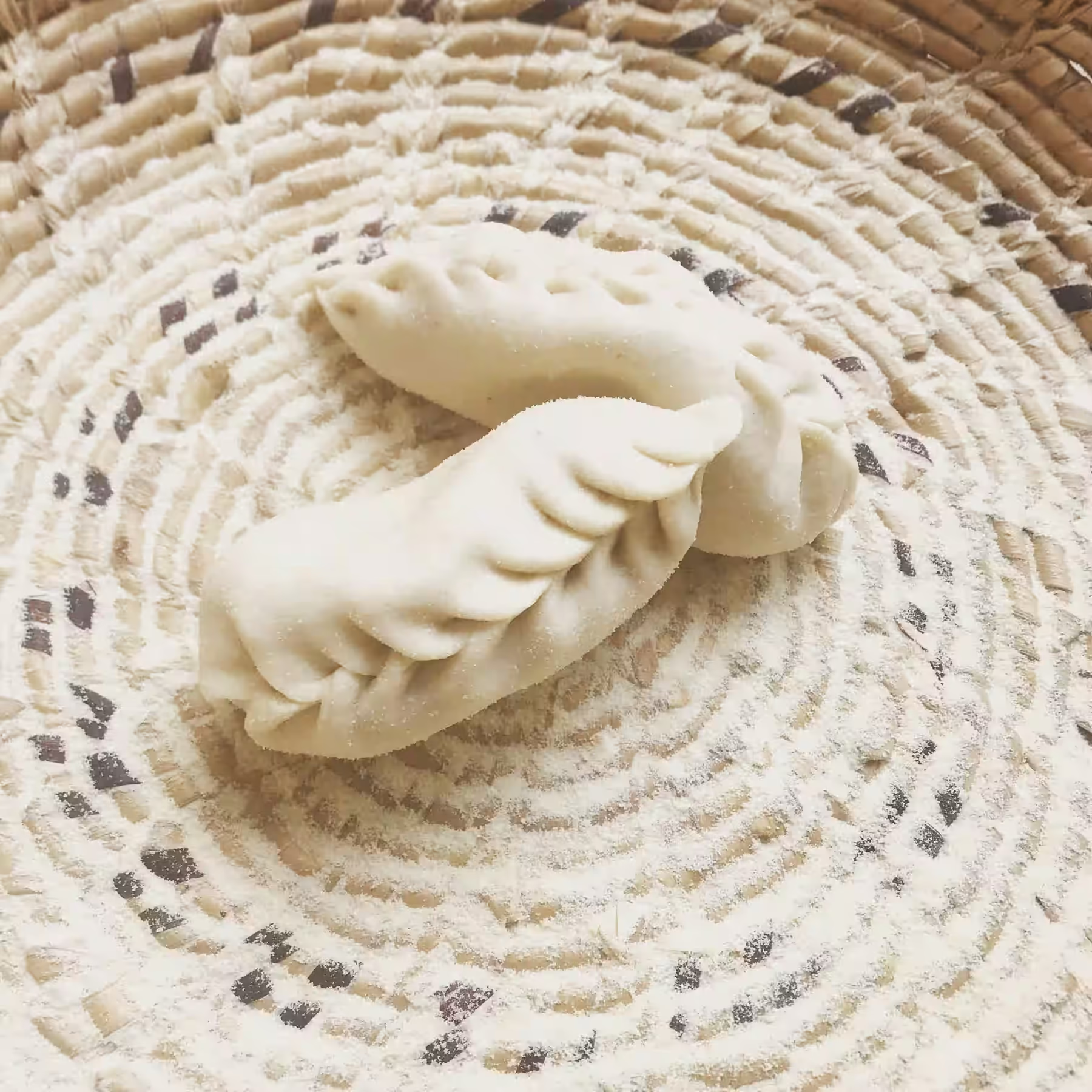
Once you have seen them, you never forget them: small plump parcels closed by a braid of pleats running from end to end. Culurgiones are one of Sardinia's best-loved dishes, and their secret is simple: a full-flavoured filling and a movement of the fingers that you learn with practice.
What culurgiones are
Culurgiones (also spelled culurgionis) are fresh pasta parcels from Ogliastra, on the island's east coast. They are protected as Culurgionis d'Ogliastra PGI, but families all over Sardinia make them, each with small variations of their own.
They used to be served on special occasions and at the end of the harvest. The pleated seal, sa spighitta, imitates an ear of wheat, and was said to bring a good crop.
The filling
The classic filling is potato, cheese, fat, garlic and mint. Proportions change from village to village; this is a base for about four people:
- 500 g floury yellow potatoes, boiled and mashed
- 150 g Sardinian pecorino, grated, ideally partly aged
- A handful of fresh mint leaves, chopped
- One garlic clove, crushed and left to infuse in the oil
- Two tablespoons of extra virgin olive oil and a pinch of salt
The filling should be firm and compact. Too soft and the seal will not hold; too dry and the cooked parcels feel stodgy. Make it a few hours ahead, or the night before, so the flavours can blend.
The dough
The dough is made from durum wheat semolina, a little plain flour, warm water and a pinch of salt, with no eggs. Knead it for a long time, until smooth and elastic, then rest it under a cloth for half an hour. Roll it thin and cut discs about eight centimetres wide.
The wheat ear is closed one pinch at a time: a slow gesture, and that is what makes it beautiful.
How to fold them, step by step
- Roll a ball of filling the size of a walnut and place it in the middle of a disc.
- Hold the disc in the palm of your left hand, cupping it slightly around the filling.
- Start at the bottom. With the thumb and index finger of your right hand, pinch the edge and fold it towards the centre, first from one side and then from the other.
- Work upwards, alternating. Each pleat overlaps the last one a little, and the braid slowly forms while your left thumb pushes the filling inside.
- Close the tip with a firm pinch so the parcel does not open while cooking.
The first ones will come out crooked, and that is normal. After twenty or so, your fingers find the rhythm.
Cooking and serving
Cook culurgiones a few at a time in plenty of salted water, and drain them a few minutes after they rise to the surface. The traditional sauce is a simple tomato and basil sauce with plenty of grated pecorino. Some families serve them with butter and sage, or just with a drizzle of Bosana extra virgin olive oil and pecorino.
Learn the wheat-ear fold with us
The fold only really makes sense when you watch the hands of someone who has done it all their life. In our fresh pasta class you make the filling, roll the dough and fold your own culurgiones, then we sit down to eat together. If you like Sardinian pasta, read how to make malloreddus too.