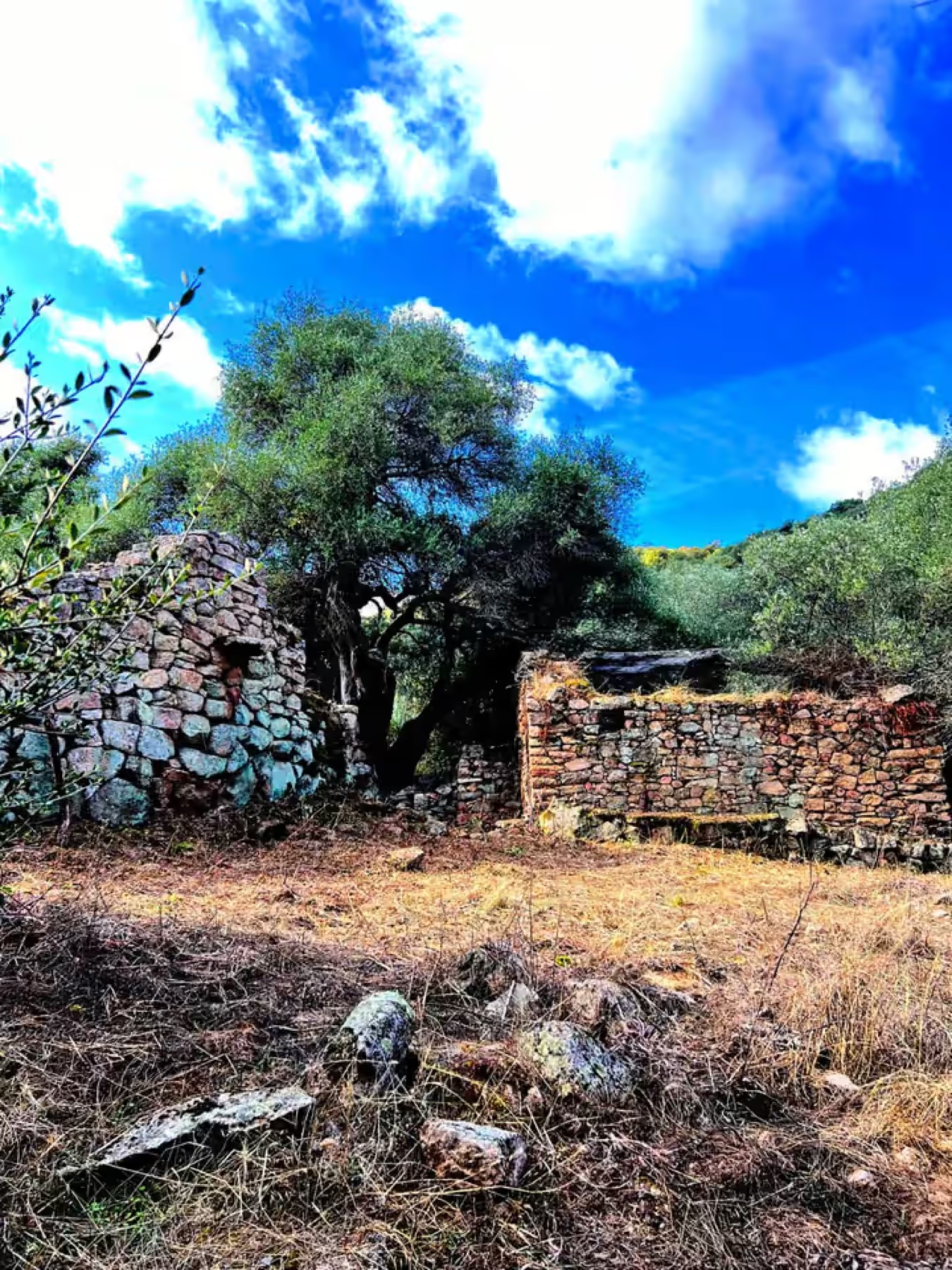
In Sardinia, prehistory is not only in museums. It stands in the middle of fields, on hilltops, next to country roads. Logudoro, the region where our farm is, is one of the richest parts of the island for anyone curious about the nuraghe and the even older monuments that came before them.
Domus de janas, the fairy houses
Domus de janas are tombs carved into the rock, often grouped in small necropolises. The name means "houses of the fairies" (or witches) in Sardinian: legend said tiny creatures lived in them. In fact they are burials from the Neolithic and Copper Age, far older than the nuraghe.
Some reproduce the houses of the living inside, with ceilings carved to look like beams, false doors and symbols painted in red ochre. In 2025 they were added to the UNESCO World Heritage List.
They have a close link with Ozieri: the culture that carved many of them takes its name from the San Michele cave in the centre of town, where the finds that made it known were discovered. Read more in our guide to Ozieri and Logudoro.
The nuraghe, towers of stone
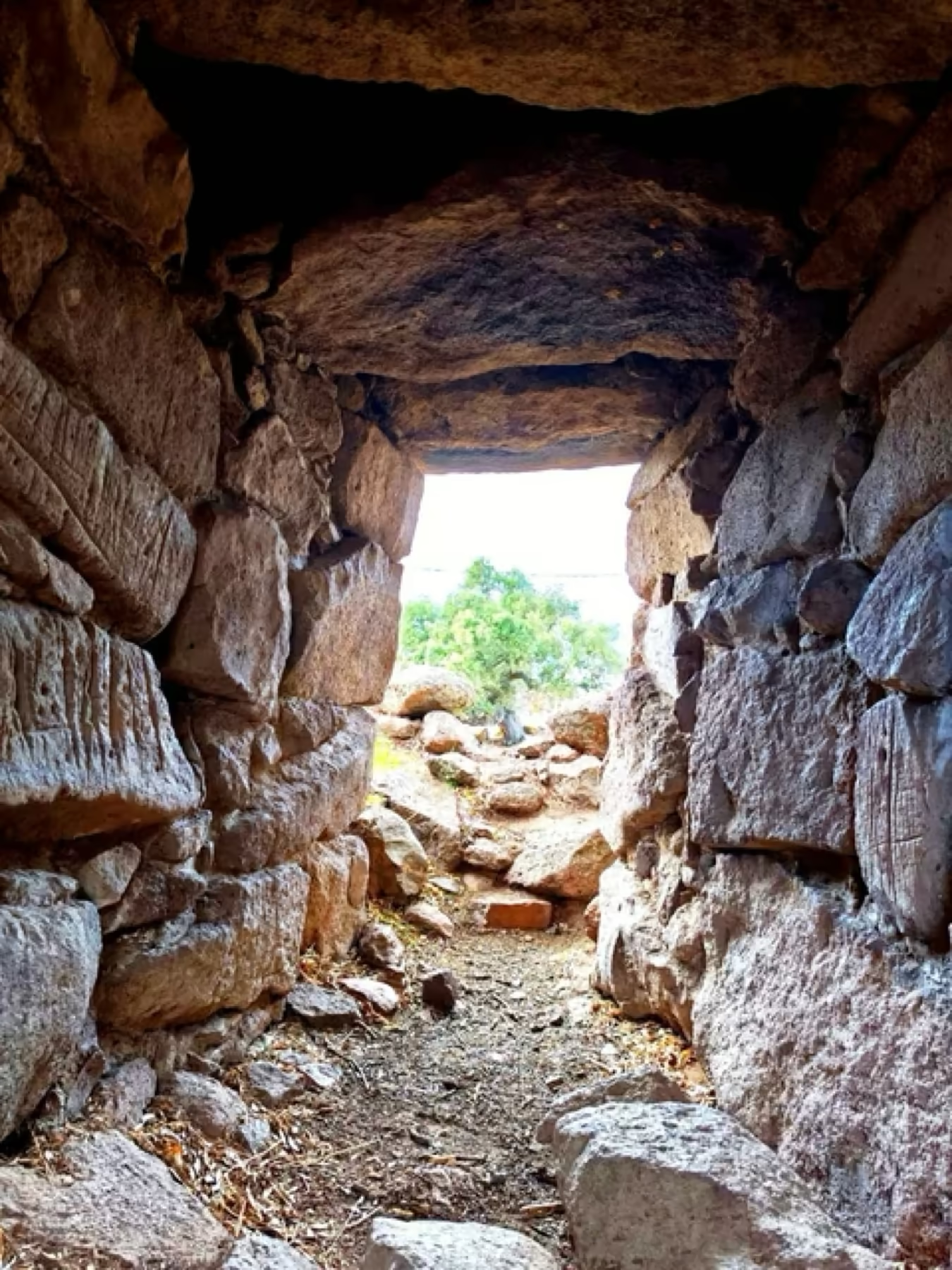
The nuraghe are Sardinia's symbol: cone-shaped towers built from huge stone blocks laid without mortar. There are several thousand across the island, built during the Bronze Age by the civilisation named after them, the Nuragic civilisation.
Some are single towers, others are complexes of several towers joined by walls, with courtyards and villages of huts around them. What exactly they were for is still debated: fortresses, chiefs' homes, lookout points over the land, probably a bit of everything.
Giants' tombs
Giants' tombs are the collective graves of the Nuragic age. They have a long covered chamber and, in front of it, a forecourt of stones set in a semicircle, like two open arms. In the oldest ones a tall rounded stele with a small opening at its base stands in the middle.
The name comes from their size: people who found them in past centuries thought only giants could have been buried there.
First the fairy houses, then the towers, then the giants' tombs: thousands of years of history in the same landscape.
Where to see them near us
- San Michele cave, Ozieri: in the heart of town, the place that gave its name to the Ozieri culture. The finds are in the town's Archaeological Museum.
- The Valley of the Nuraghe: near Torralba, a plain dotted with towers. The best known is Nuraghe Santu Antine, one of the most impressive on the island.
- Su Casteddu de Olomene: a hilltop nuraghe near Pattada, reachable only on foot, with a 360-degree view. It is the goal of our hike Olomene Castle and the Ghost Village.
- Sa Mandra Manna: a Nuragic site above Lake Coghinas, which we reach on a long, flat walk in The Secret of Sa Mandra Manna.
Tips for your visit
Many sites are in open countryside, with no shade and no facilities. Bring water, closed shoes and a hat, and choose the cooler hours in the warm months. Respect fences and gates: monuments often stand on grazing land.
The best way to understand these places is to walk to them with someone who knows them. See all our guided hikes, and a quiet place to stay at our farm stay.